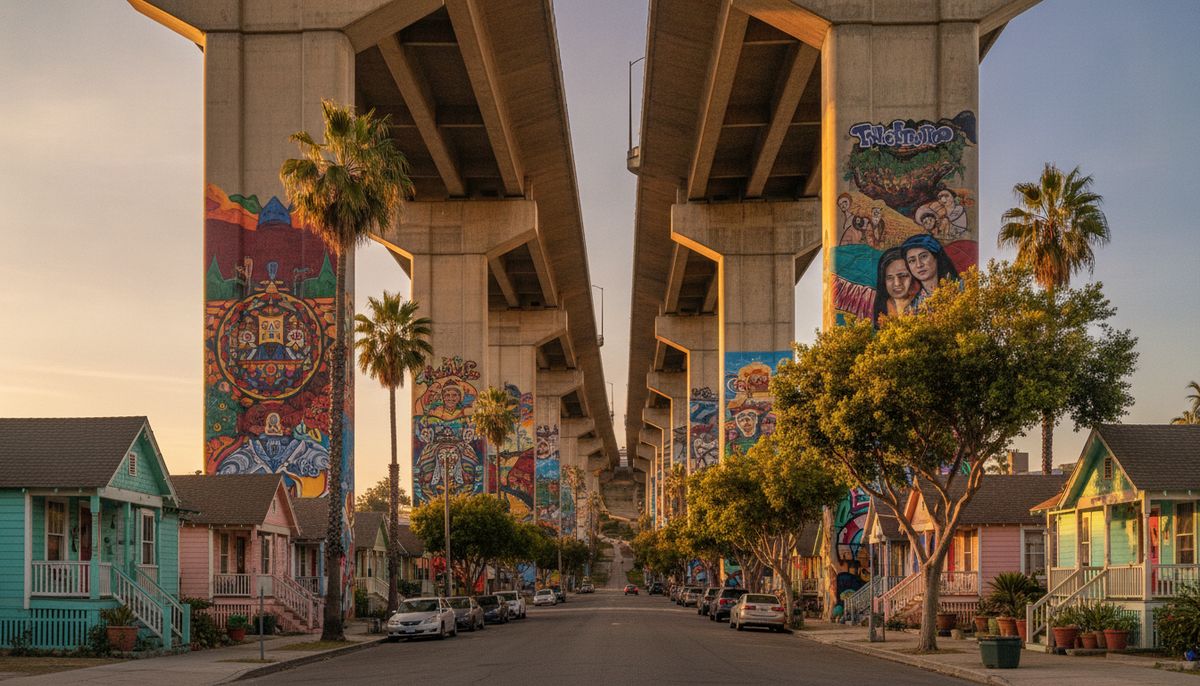
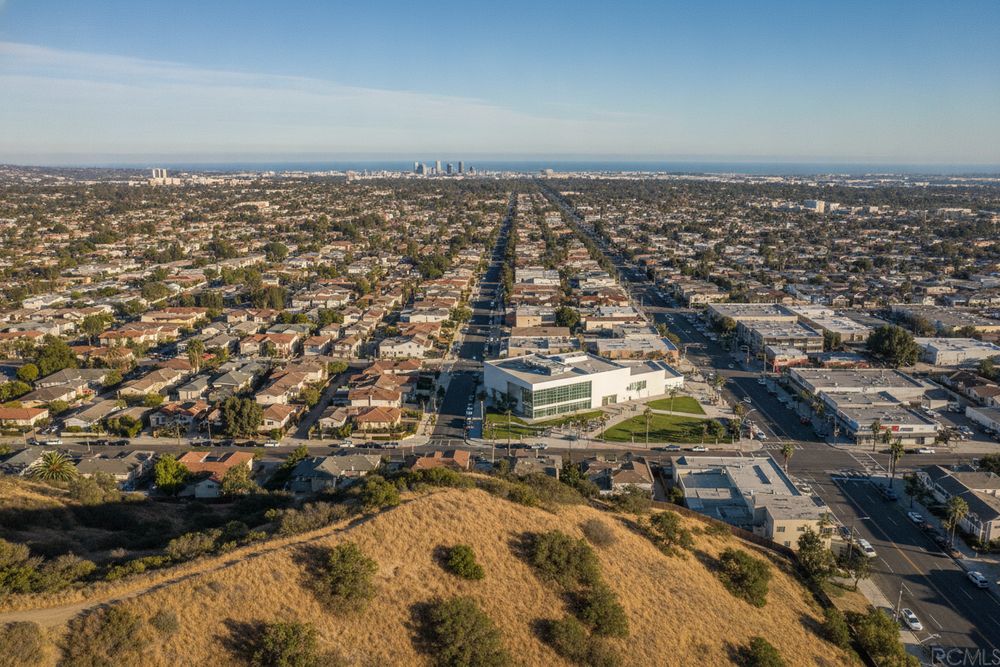
Logan Heights spreads east of downtown, bounded by Interstate 5 on the south and west, Interstate 15 on the east and Imperial Avenue on the north. A street laid out in 1881 was named for Congressman John A. Logan, who had pushed a transcontinental railroad ending in San Diego, and the name spread to the whole district. The railroad never came, and the area became one of the city's oldest residential neighborhoods. Its southern portion became Barrio Logan. Greater Logan Heights is often used to include Sherman Heights, Grant Hill, Stockton and Memorial on its northern side.
Homes and lots in Logan Heights
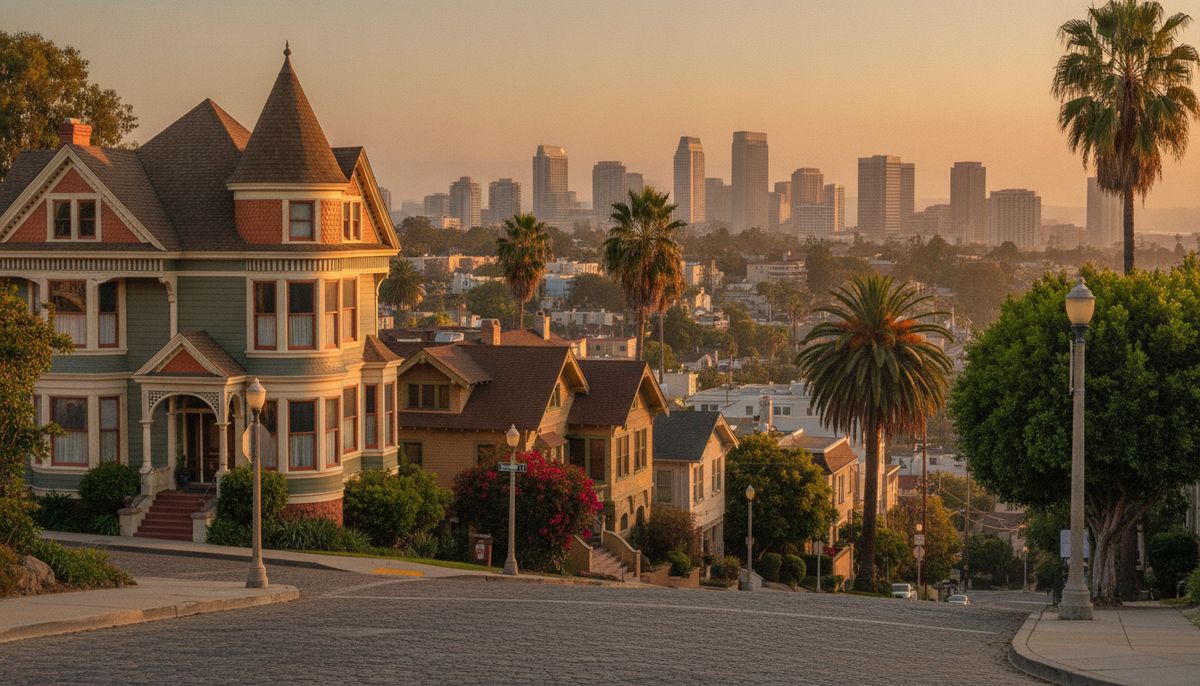
The housing reaches back to the late nineteenth century. Victorian cottages and Queen Anne houses with wood siding and front porches survive alongside Craftsman bungalows from the 1910s and 1920s, small stucco homes from later decades and apartment buildings of many ages. Lots are small, often 25 or 50 feet wide on a dense grid, and a front house with a rear cottage is a common arrangement. Some streets near the freeways were cleared and rebuilt with newer multi-family housing. The terrain climbs gently from the bay toward Grant Hill, giving some blocks downtown and harbor views.
How Logan Heights sales behave
Logan Heights has some of the lowest prices for detached homes so close to downtown, which draws first-time buyers, investors and buyers interested in restoring old houses. Sales of lots with two or more units are frequent, and many buyers look at rental income first. Restored Victorians, especially in Sherman Heights and Grant Hill, often sell above the area norm. Freeway edges and blocks near industrial zones sell for less. The 2007 opening of the new Logan Heights library branch and continued interest in central housing have kept demand steady.
Neighborhoods and subdivisions
Grant HillLogan Heights coreMemorialSherman HeightsStockton
Landmarks
- Interstate 5
- Interstate 15
- Imperial Avenue
- Memorial Park
- Logan Heights Branch Library
Appraisal watch points in Logan Heights
Old houses mean careful condition work: foundations, wiring, plumbing and roof framing on pre-1920 homes vary enormously. Brian verifies the legal number of units, because rear cottages and conversions are widespread and not always permitted. Some properties sit in historic districts like Sherman Heights or Grant Hill, which affects what changes are allowed. Freeway proximity calls for noise adjustments, and view lots near the top of Grant Hill may earn a premium. In Logan Heights clients can choose any of Brian's six report types, including the inspected Drive-By and Standard, since the area sits inside his in-person service region.
My parents' Victorian in Logan Heights needs a lot of work. How does the appraiser handle condition for the estate?
Brian rates condition from what he sees and compares the house with other older homes that sold needing similar repairs, not with restored ones. If major items such as foundation, roof or electrical are clearly failing, the report notes them and the comparables reflect that buyer pool. Repair estimates from contractors, when the family has them, help support the adjustments.