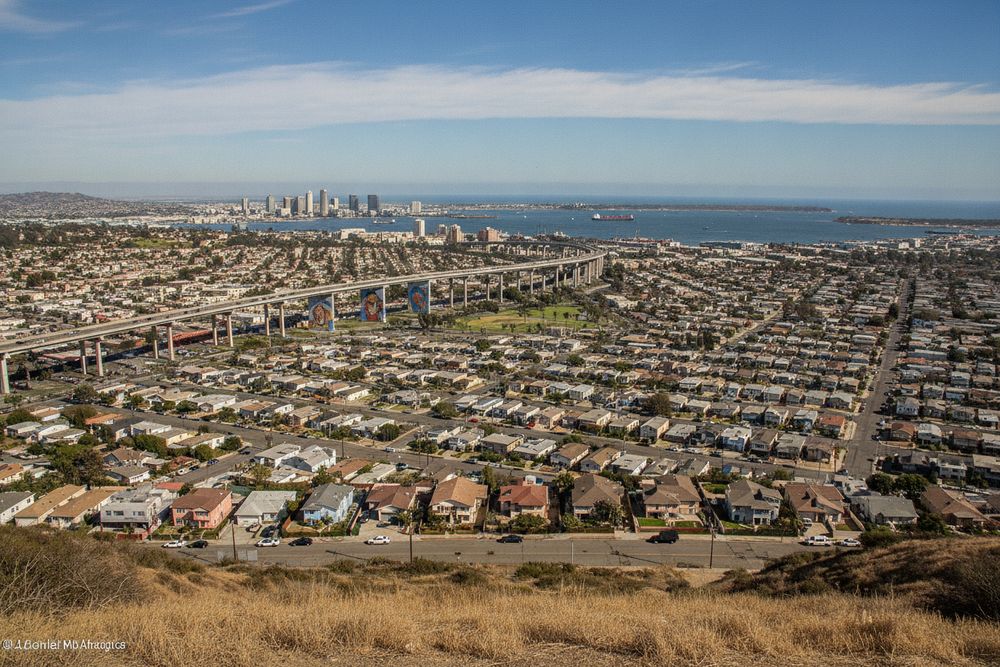
Barrio Logan lies along San Diego Bay southeast of downtown, between Interstate 5 and the water, with Logan Heights and East Village to the north and National City to the southeast. It began as the southern part of Logan Heights, named for Congressman John A. Logan. Interstate 5 was cut through the neighborhood in 1963, and the San Diego-Coronado Bridge followed in 1969, its pillars landing on residential blocks. In 1970 residents occupied the land beneath the bridge for twelve days to stop a planned state building, and the site became Chicano Park, now on the National Register with dozens of murals.
Homes and lots in Barrio Logan
Housing is scattered among shipyards, machine shops, warehouses and artist studios. Small wood-frame cottages and Victorian-era houses from the early twentieth century survive on some blocks, many in modest condition, along with older apartment buildings and a few newer affordable and mixed-use projects near the trolley. Lots are small and often irregular. Industrial and residential uses sit side by side, sometimes on the same block, because decades of zoning allowed both. More than half of the community plan area is under Port of San Diego or Navy jurisdiction, so the stock of private housing is limited.
How Barrio Logan sales behave
Detached houses rarely come up for sale, and when they do, buyers range from longtime local families to investors and people interested in arts and commercial space along Logan Avenue and Cesar Chavez Parkway. Proximity to downtown, the Barrio Logan trolley station and the Coronado Bridge are strengths, while industrial neighbors and port truck traffic are weaknesses. The state named Barrio Logan a California Cultural District in 2017. Mixed-use buildings and small commercial properties often draw more interest than residential lots, and prices depend heavily on zoning and use.
Neighborhoods and subdivisions
Cesar Chavez Parkway corridorChicano Park blocksLogan Avenue arts corridorMain Street maritime stripMercado del Barrio
Landmarks
- Interstate 5
- NASSCO shipyard
- San Diego-Coronado Bridge
- Chicano Park
- Barrio Logan Trolley Station
Appraisal watch points in Barrio Logan
Zoning is the first question. Community plan disputes, including a 2014 referendum that rejected a proposed buffer between homes and industry, have shaped what can be built. Brian verifies the zone for each parcel. Adjacent industrial uses, diesel traffic and shipyard noise warrant external-obsolescence adjustments, and properties in the Coastal Zone face added review. Comparable sales are scarce, so the search often widens to Logan Heights and Sherman Heights. Barrio Logan is a place Brian visits personally, which puts a Drive-By or an interior Standard on the table here; the three desktop products remain available too and make sense whenever nobody can get inside.
My grandmother's small house in Barrio Logan is right next to a machine shop. Does that lower the value?
It likely does to some degree, and the appraisal should show by how much. Brian looks for sales of homes next to industrial uses in Barrio Logan and Logan Heights and compares them with sales on quieter residential blocks. He also checks the zoning, because a parcel that allows mixed or commercial use may appeal to a broader set of buyers, which can offset the drawback.