Poway sits in a broad inland valley northeast of the City of San Diego, ringed by chaparral ridges and boulder-strewn peaks, and it holds onto the motto it adopted at incorporation: "The City in the Country." That phrase is more than branding for an appraiser. Inside the same 92064 ZIP code a 1970s tract house on a 7,000-square-foot lot near Twin Peaks Road can sit two miles from a ten-acre parcel above Lake Poway with its own barn, arena and well. Brian Ward appraises Poway homes for private, legal and tax purposes: estates and trusts, divorce, bankruptcy, Prop 19 transfers, insurance claims, court testimony and pre-sale or pre-purchase decisions. He does not do appraisals for home loans. Because Poway is inside Brian's personal visiting territory, all formats apply, starting with the $299 Basic Desktop and running up to an inspected Standard from $699 or a Standard 2-4 Unit from $799. Licensed as a California certified residential appraiser in 2004, Brian has since finished upward of 7,000 valuations around San Diego County.

A short history
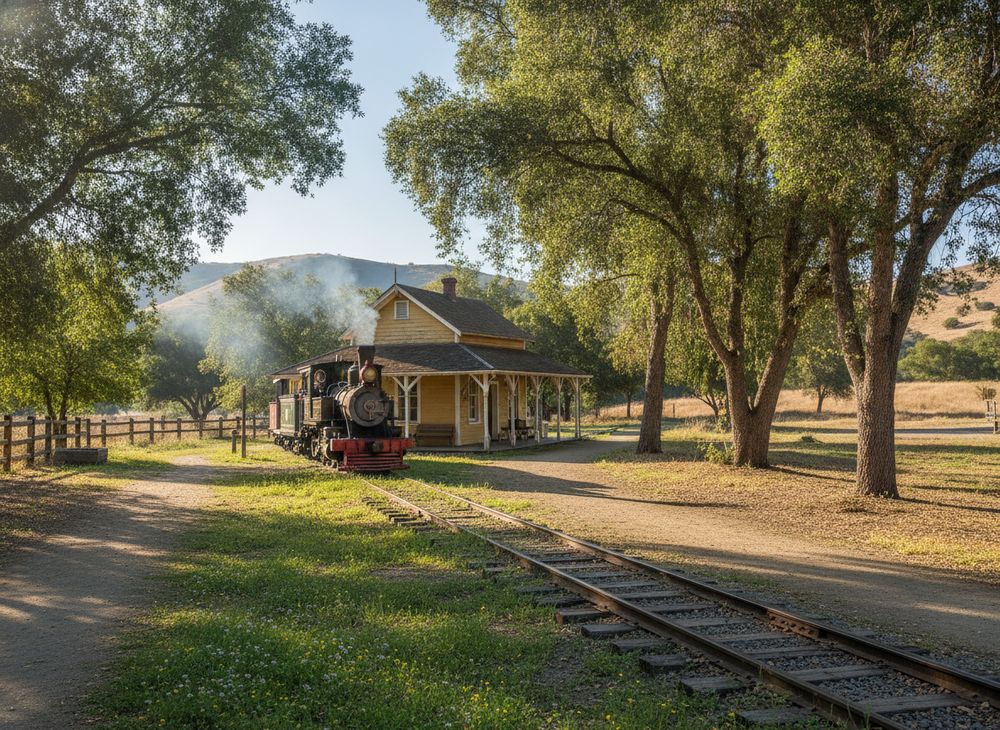
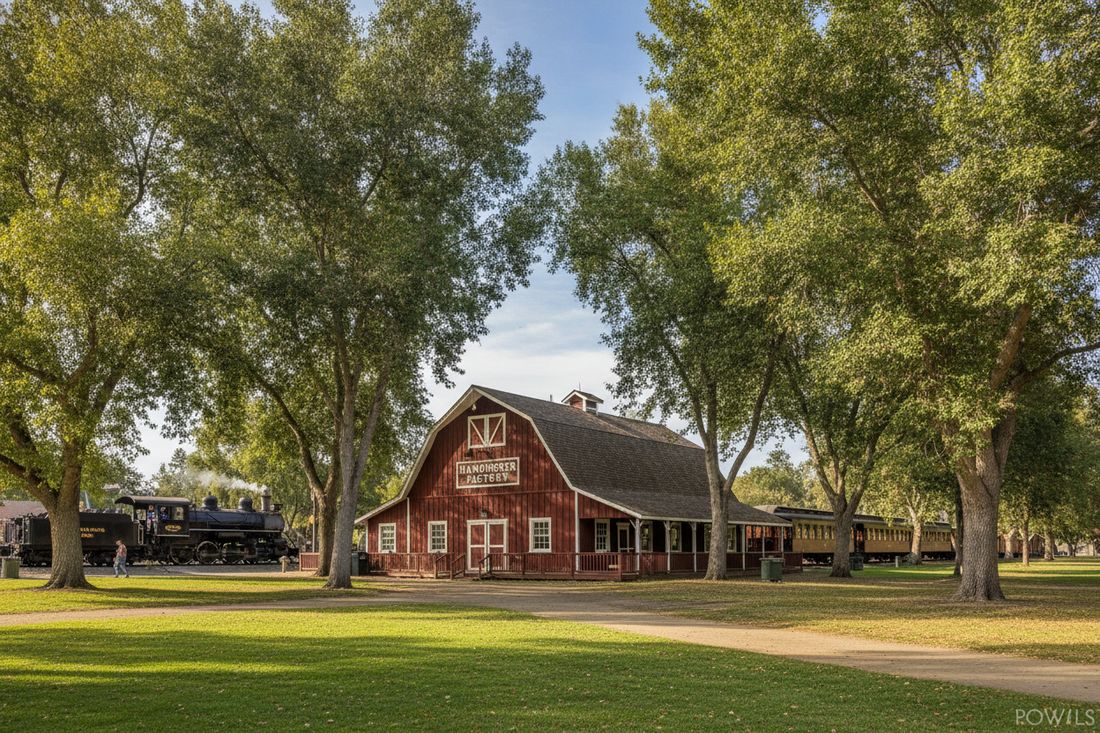
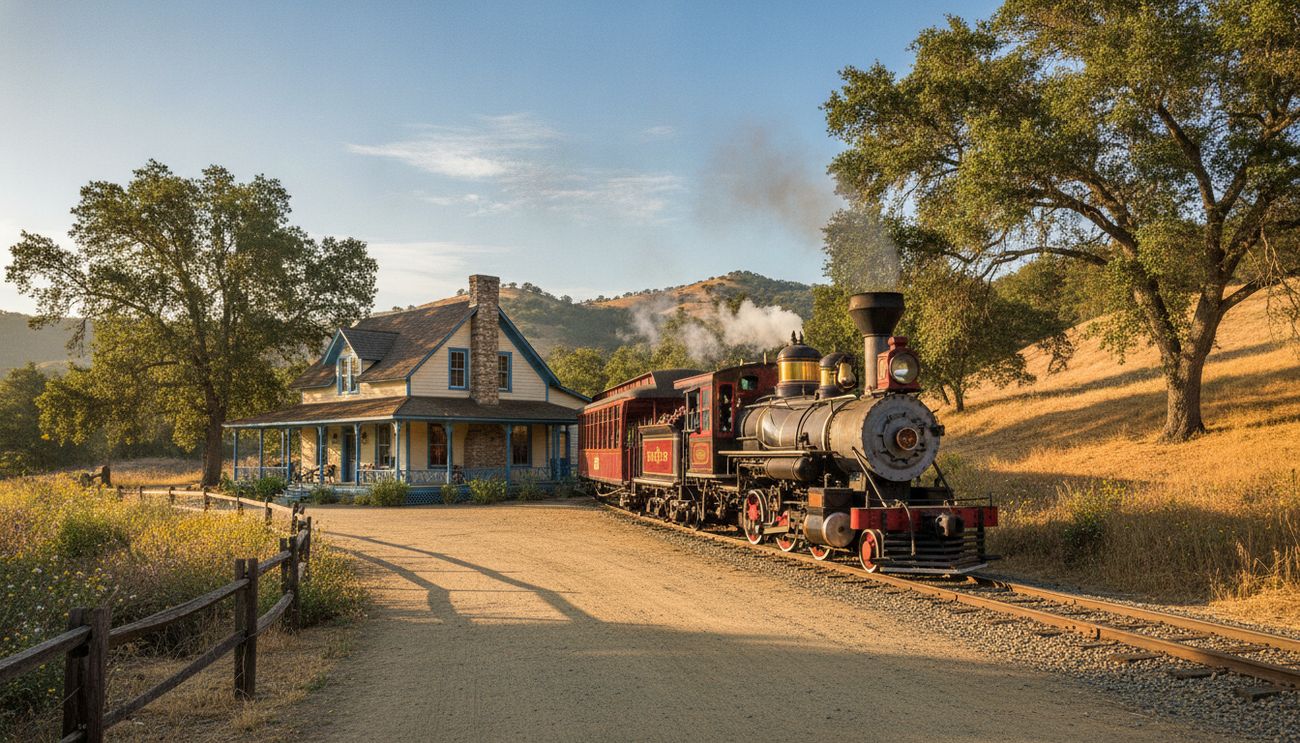
Long before the valley had a name on any map, Kumeyaay families camped along Poway Creek, and artifacts and rock art found along the drainage record their presence. Mission San Diego de Alcala ran cattle across the grassland in the late 1700s, and mission records from 1828 spell the place "Paguay." A Mexican land grant called Rancho Paguai was issued in 1839, but the grantee, Corporal Rosario Aguilar, declined it, so the valley never became a working rancho in the way Penasquitos or San Bernardo did. American homesteaders arrived in the second half of the 1800s and farmed grain, grapes and stock; Niles Nelson patented his homestead off Garden Road in 1883, and his family's 1918 farmhouse now stands in Old Poway Park. The real turning point came in July 1954, when the new Poway Municipal Water District began delivering imported Colorado River water. Subdivisions followed by 1959, and Poway Dam created Lake Poway in 1972. Poway incorporated as a city on December 1, 1980, and the new city chose "The City in the Country" as its motto, a phrase that still shapes zoning and open-space votes today.
Valley floor, hills and granite
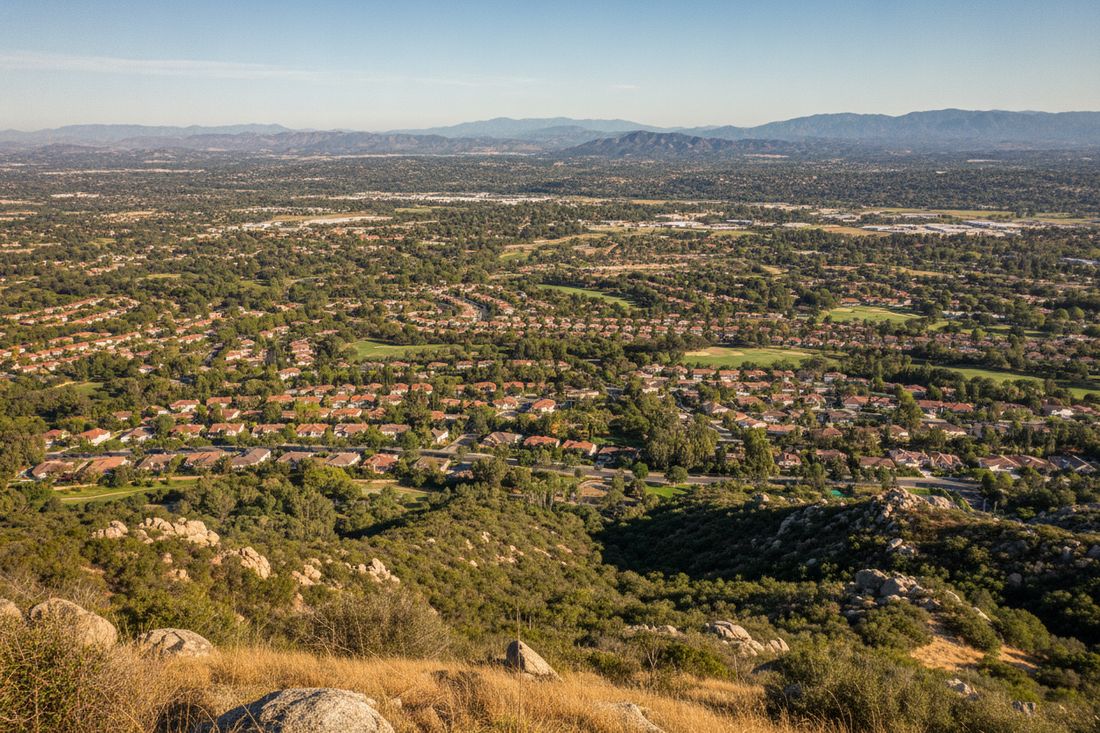
The city covers about 39 square miles, and very little of it is flat. The valley floor, roughly 500 feet above sea level, follows Poway Creek and Rattlesnake Creek from the Poway Road business corridor west toward Pomerado Road. That bottomland holds most of the 1960s and 1970s tracts, the civic center and the South Poway business park. Around it the ground climbs fast. Twin Peaks rises from the hills in the middle of the city, lending its name to Twin Peaks Road. To the northeast, the trail from Lake Poway climbs onto Mount Woodson, whose weathered granite boulders, including the famous Potato Chip Rock, show the same bedrock that pokes through many north Poway backyards. Iron Mountain anchors the east side near State Route 67, and Poway Road climbs the Poway Grade toward Ramona. Decomposed granite soils drain well but erode, and boulder outcrops can make a level building pad expensive to create, a point that shows up when two acre parcels sell for very different figures.
Homes and lots
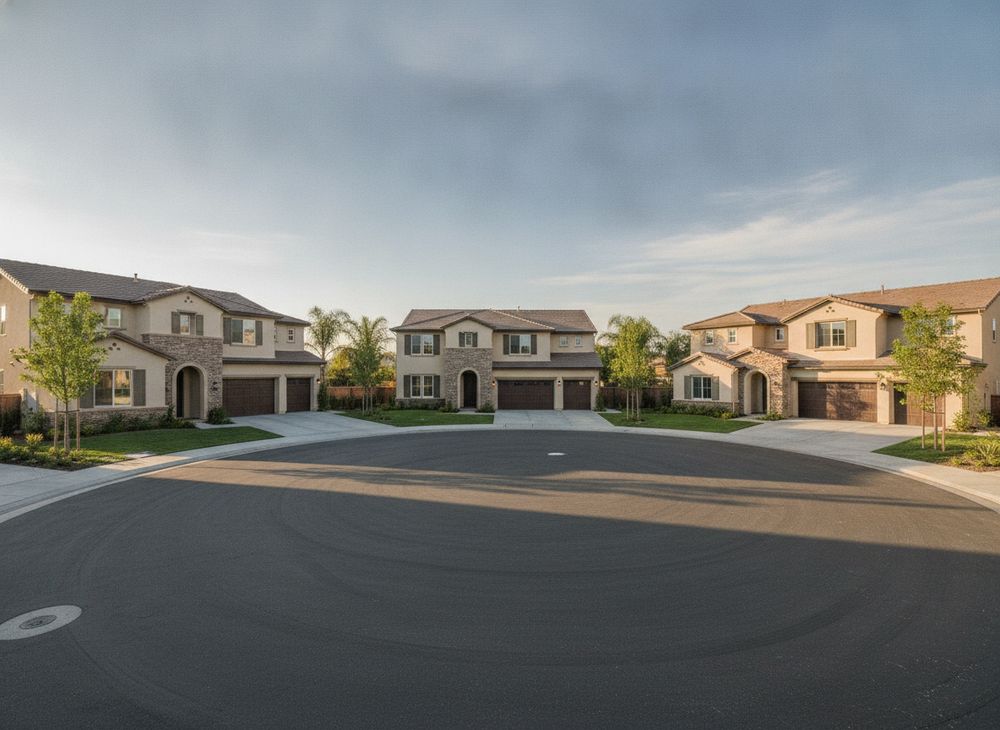
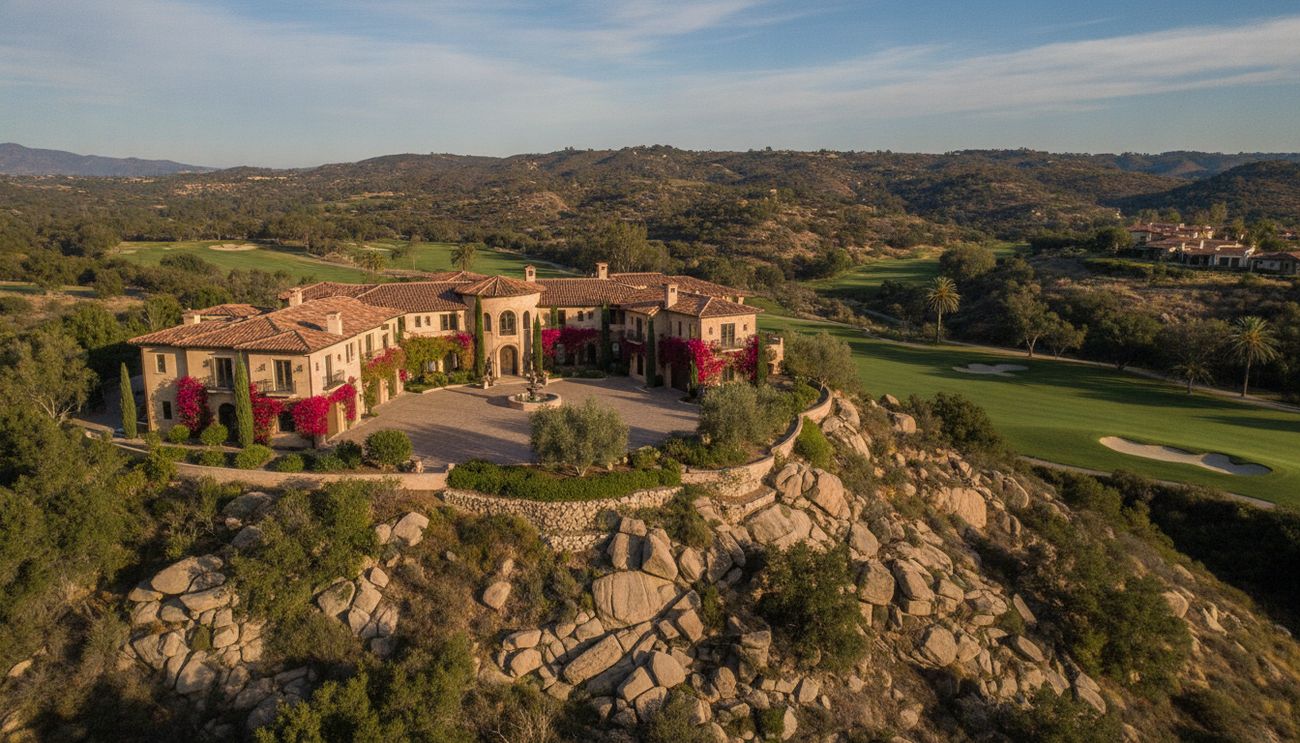
Poway's housing stock arrived in layers that track its water and its politics. A thin first layer survives from the farming decades: small board-and-batten or stucco homes from the 1940s and 1950s, some on third-acre lots still set up with corrals. The big second wave followed imported water. Tract builders covered the valley floor during the 1960s and 1970s with one- and two-story houses on lots between about 7,000 and 11,000 square feet, in Rancho Arbolitos, along the StoneRidge streets and in the neighborhoods near Garden Road. Attached housing appeared in the same period; Heritage Hills mixes late-1960s and early-1970s townhomes with detached houses. After incorporation Poway leaned toward larger lots, and the 1980s and 1990s brought semi-custom and custom homes on sites of a half acre and up along Espola Road, across Green Valley and out toward High Valley. The 2000s added gated estate enclaves near Maderas Golf Club. Recent infill is limited; the most visible example is The Farm in Poway, built by Lennar on part of the former StoneRidge golf course. Manufactured housing exists too, including Poway Royal Estates on Alpine Drive, where homes typically sit on rented spaces and are valued differently from fee-simple houses.
How Poway sales behave
Poway trades as a premium inland market within San Diego County, but the citywide median hides a very wide spread. Condominiums and older tract homes on small lots form the entry tier. Larger 1970s and 1980s houses on quarter-acre to half-acre lots make up the middle, and view estates, equestrian acreage and gated custom homes make up a thin upper tier where only a few sales close in any given quarter. That thin upper tier is the main analytical challenge. When a five-acre property in High Valley or Old Coach needs a value, the closest truly similar sale may be months old or sit in Rancho Santa Fe, Ramona or the Rancho Bernardo hills, and Brian has to support each adjustment rather than lean on a price-per-square-foot average. Brian pulls current sales and listings for each assignment rather than quoting a citywide figure, because a number that is true for tract homes near Pomerado Road can be badly wrong for acreage on the Poway Grade.
Fire history and insurance
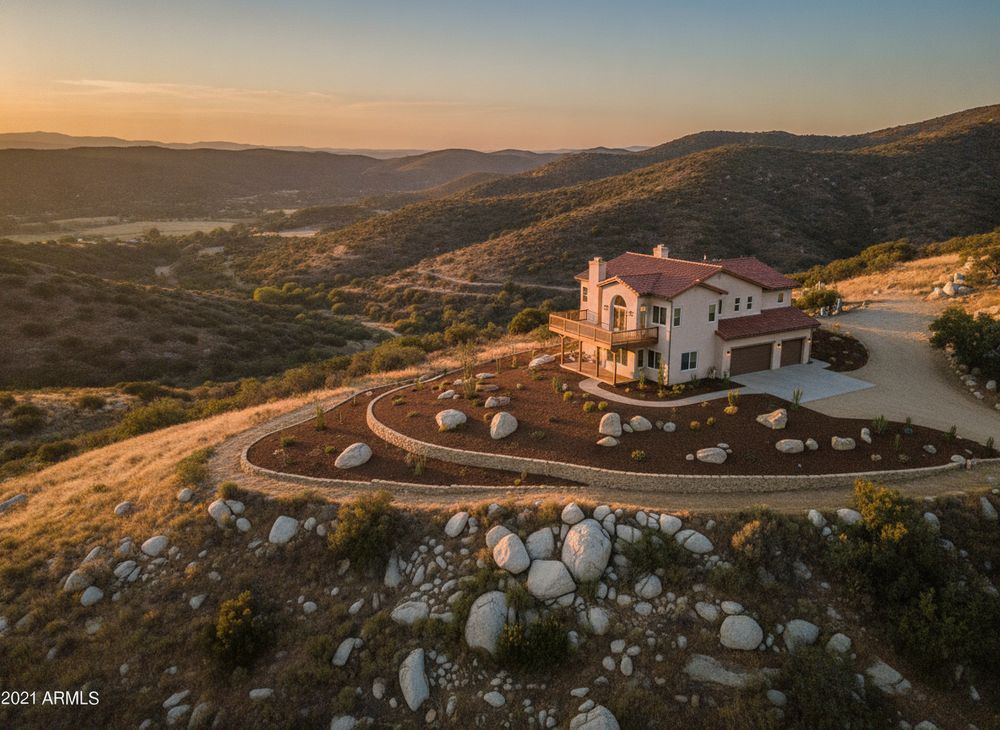
Wildfire is part of Poway's recent memory. The 2003 Cedar Fire destroyed 53 homes and one business in the city and burned the original Goodan Ranch house in the preserve to the south. Four years later the Witch Creek Fire burned about 7,247 acres inside Poway, including Lake Poway Park and the Blue Sky Ecological Reserve; the city ordered roughly 7,000 homes evacuated, and 90 homes were lost. Today the city reports that over 90 percent of its land falls within a state Fire Hazard Severity Zone. In the Very High zone, sales require a hazard disclosure, existing homes must keep defensible space in Zones 1 and 2, and Zone 0 rules take effect in January 2030. For an appraiser, the practical issue is insurance. Hillside owners dropped by mainstream insurers sometimes land on the California FAIR Plan at steeper premiums, and purchasers account for that expense in their offers. Brian reads the market reaction in actual sales rather than assuming a discount.
Water, septic and land rules
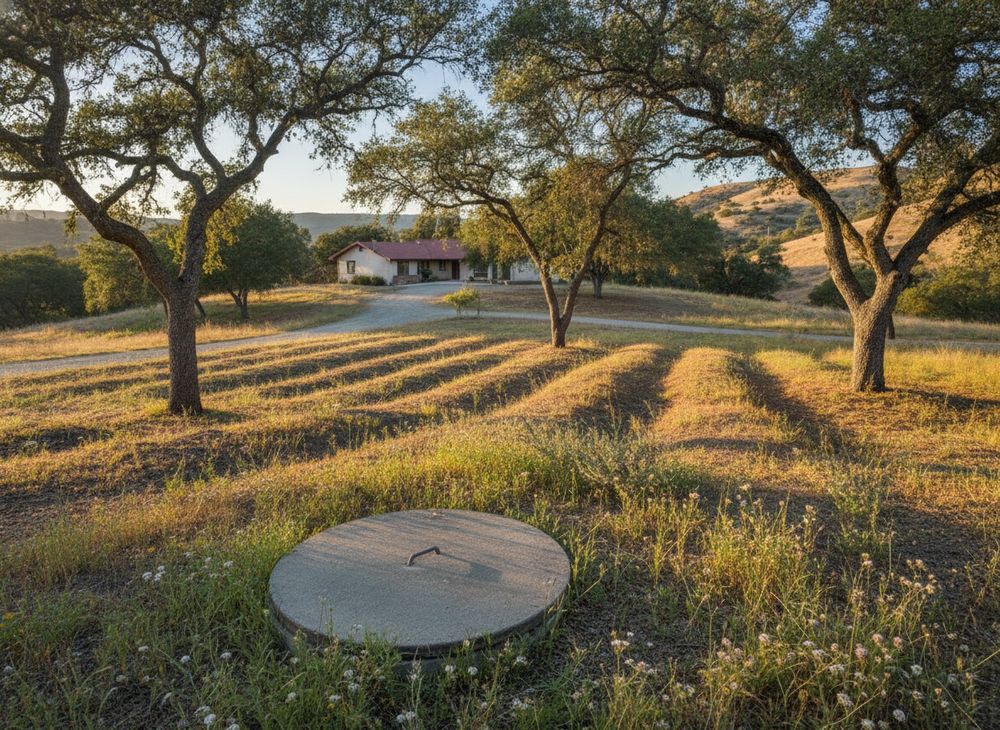
The City of Poway runs its own water utility, and most homes in the valley are on city water and city sewer. The rural edges are less uniform. Some north Poway horse parcels pair a private well with a public meter. Septic systems still exist on older and more remote lots; the city's sewer code even includes an installment plan for owners converting from septic to sewer. Zoning is spelled out in the municipal code. The rural residential zones RR-A, RR-B and RR-C, along with RS-1, carry a one-acre minimum, with density tied to slope on steeper ground. RS-2 requires 20,000 square feet, RS-3 15,000, RS-4 10,000 and RS-7 4,500. Large animals, horses included, are allowed on lots of 10,000 square feet or more, starting at two animals and scaling with lot area; RR-A and RR-B parcels over about 35,000 square feet can carry more under a permit. Brian confirms these items for each parcel.
What Brian checks on a Poway file
A Poway appraisal often turns on things a listing sheet does not show. Brian starts with the land itself: how much of a two-acre parcel is actually usable once slopes, granite outcrops, easements and creek setbacks are subtracted, and whether the building pad sits above or below the road. On equestrian parcels he looks at what the zoning permits, how many animals the lot can legally hold, and whether the barn, arena and trail access are the kind of improvements buyers pay for or just tolerate. Water and waste matter on the fringe; a property on a well or septic system is compared against similar properties first. View quality across Lake Poway or toward Mount Woodson can separate two otherwise similar houses. Fire zone status, recent rebuild history after 2003 or 2007, and insurance cost all feed into the comparable selection. Because Poway is one of his in-person communities, Brian can walk the property for a Standard report, drive it for a Drive-By, or work from data when a desktop report fits the assignment, and he chooses comparables from the same micro-market rather than citywide averages.
Landmarks
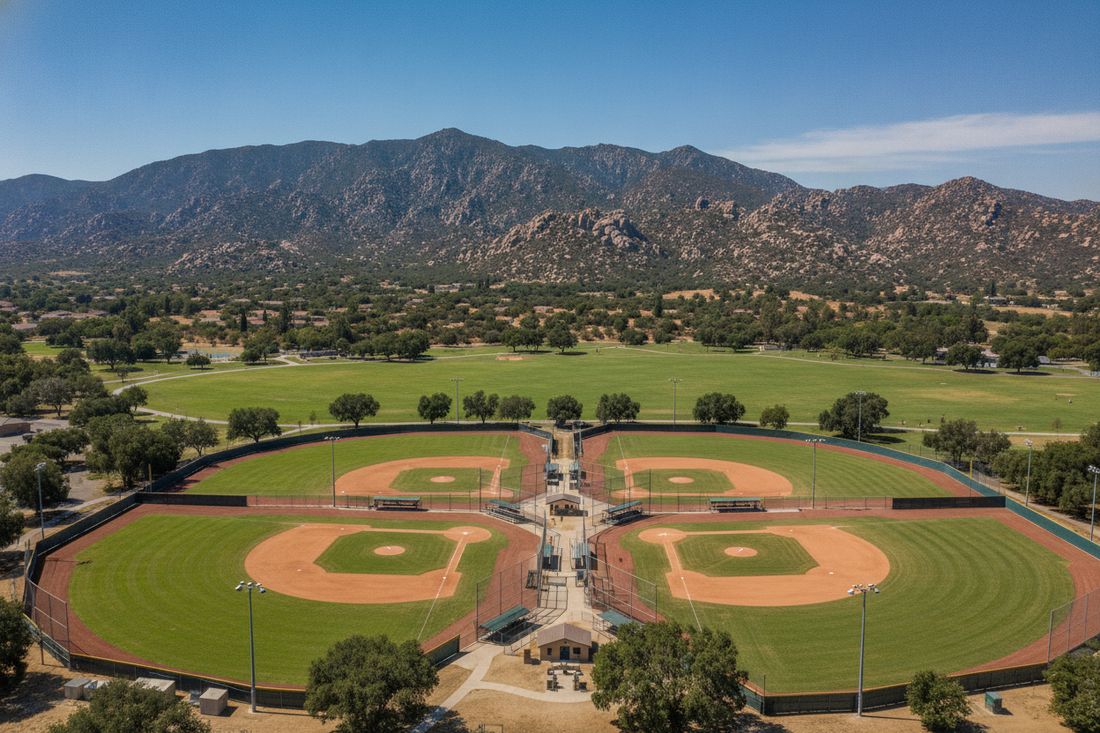
- Old Poway Park and the Poway-Midland Railroad
- Lake Poway and Poway Dam
- Mount Woodson and Potato Chip Rock
- Iron Mountain trailhead on State Route 67
- Blue Sky Ecological Reserve
- Twin Peaks
- Goodan Ranch / Sycamore Canyon Preserve
- Poway Center for the Performing Arts
- Maderas Golf Club
Poway neighborhoods
 Old Poway and the Poway Road Core
 Green Valley
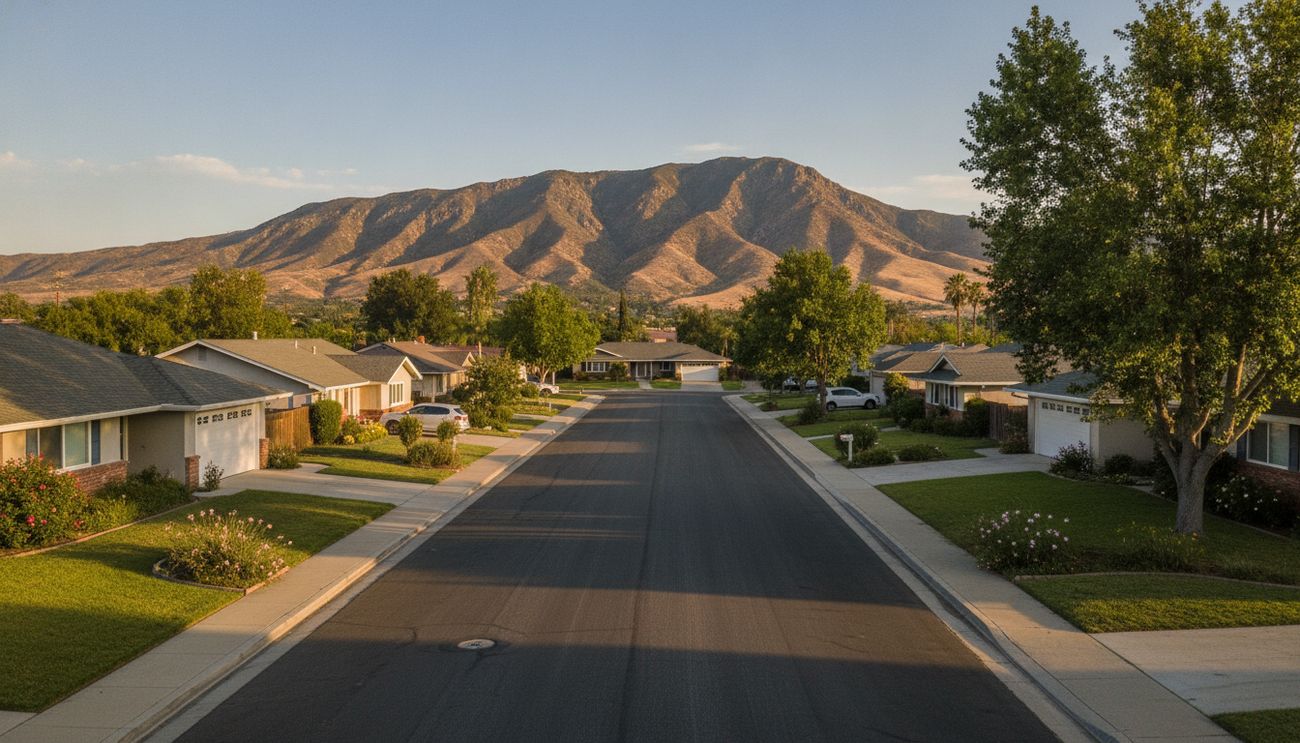 Garden Road and Sycamore Creek
 High Valley
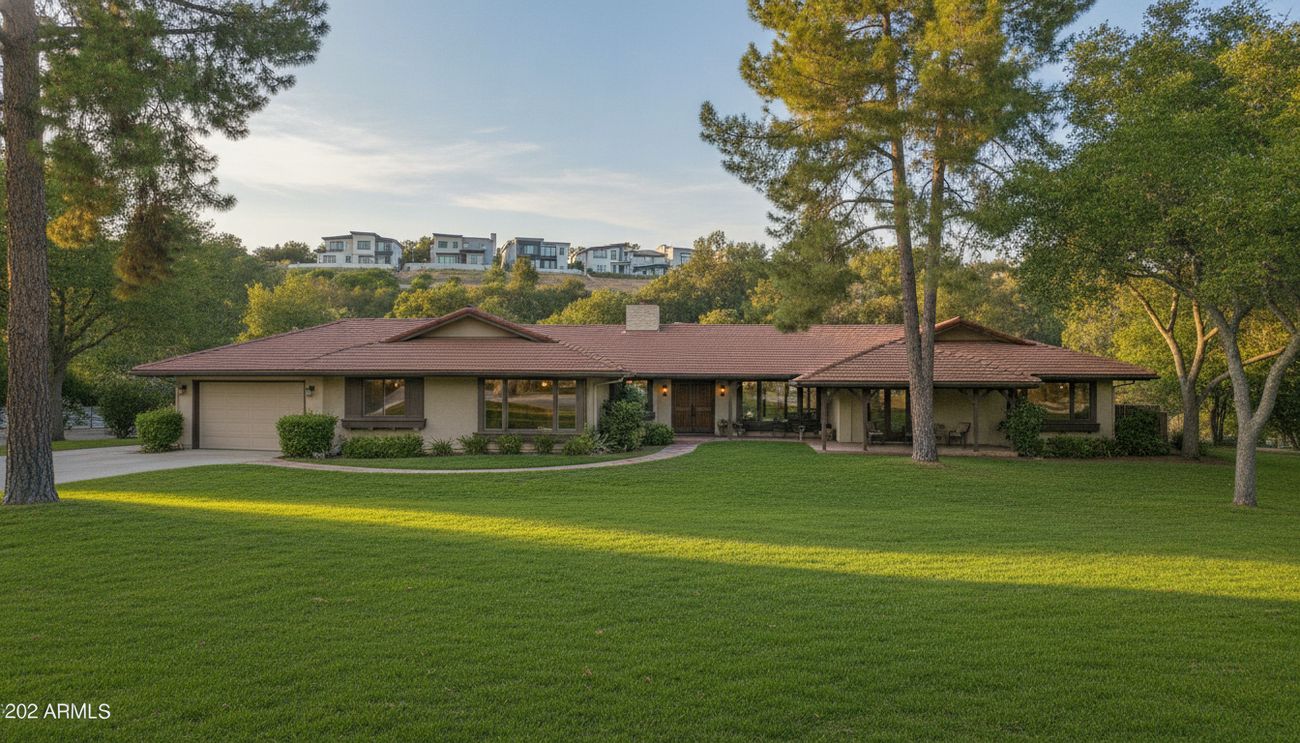 StoneRidge
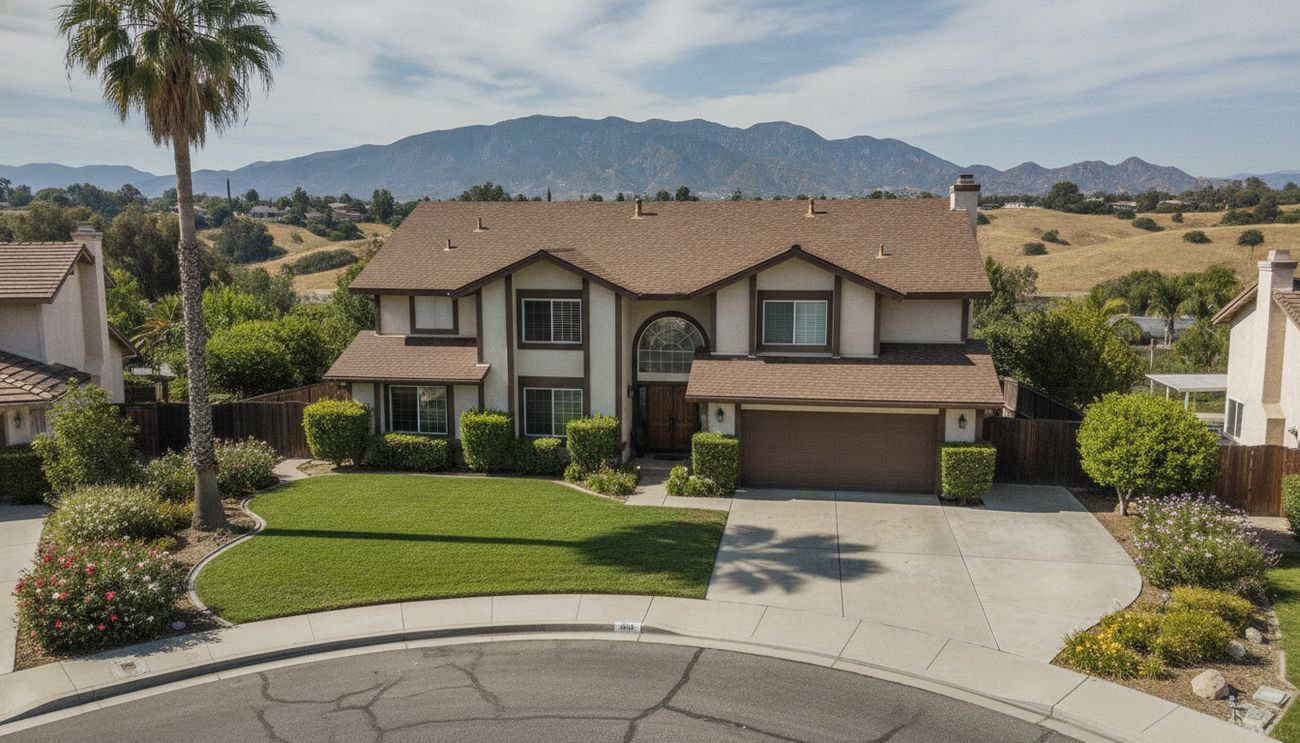 Rancho Arbolitos
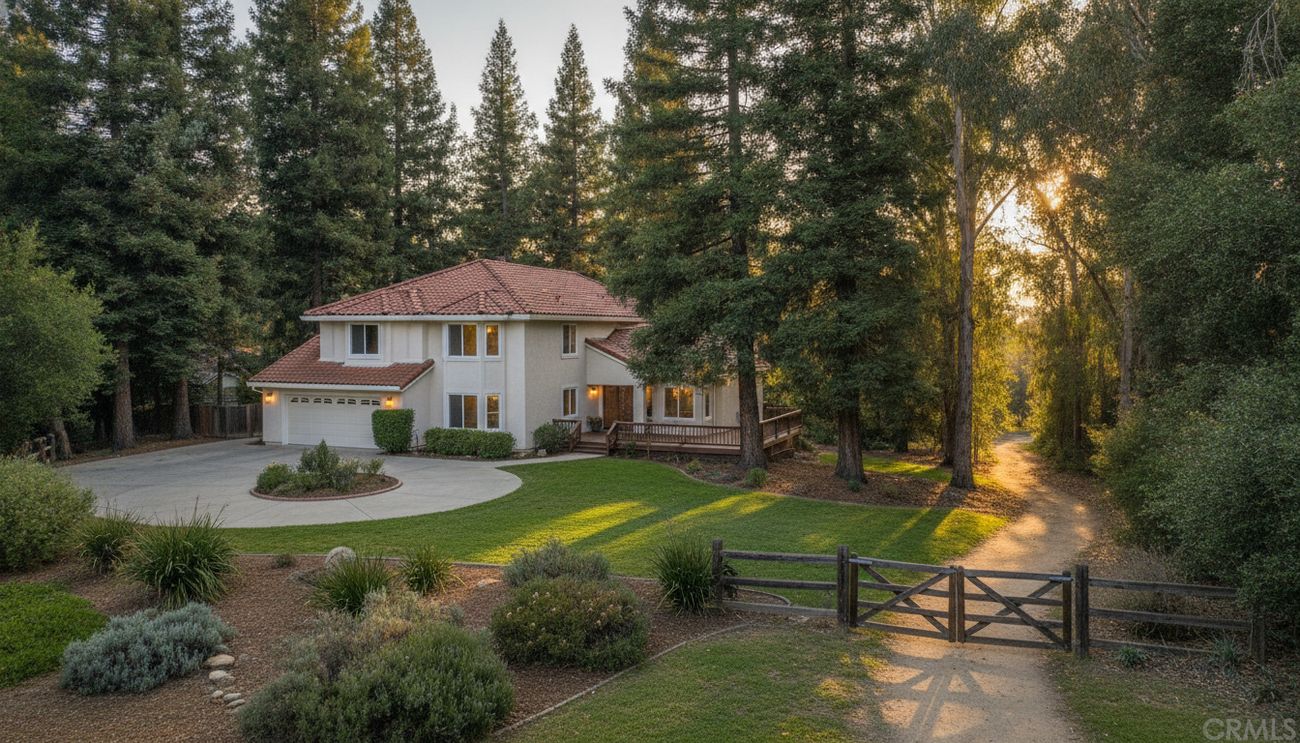 Bridlewood
 Old Coach and Maderas
Poway questions
Can Brian appraise a Poway horse property with a barn and arena?
Yes. Equestrian parcels are common in Green Valley, along Garden Road toward Sycamore Canyon and on the larger RR zoned lots in north Poway. Brian first confirms the zoning and how many large animals the lot can legally keep under the city's animal-density table, then documents the barn, stalls, arena, round pen and trail access. Comparable selection favors other horse-ready properties, because a buyer looking for corrals will pay for them while a buyer who is not may only value the land. The report explains how each equestrian improvement was handled.
How does Brian value a hillside lot with a lot of unusable land?
He separates the site into what can be used and what cannot. On a three-acre parcel above Lake Poway, maybe one acre is a graded pad and yard while the rest is steep chaparral or boulder outcrop. Brian compares the property against sales with similar usable area and similar topography rather than counting raw acreage. When a parcel holds genuinely excess land that could be split off under its zoning, he treats that portion differently from surplus land that is simply too steep to build on.
Can Brian provide a value as of a past date for a Poway estate?
Yes. Retrospective appraisals are routine for trust administration and estate tax work. Suppose the owner of a Poway house died in 2022: Brian studies closings near that date, judges the home's condition back then from photos, permits and relatives' memories, and spells out the effective date in writing. An inspection is still possible now, and Brian records any alterations made after the death so the conclusion describes the house as it was on that date.
Does Brian appraise homes in Poway for home loans?
No. Because Brian works only on private, legal and tax matters, his reports are not for home loans. Typical Poway work includes estate and trust valuations, divorce settlements, bankruptcy filings, Prop 19 parent-child transfers, insurance claims after fire or water damage, court testimony, and pre-purchase or pre-listing opinions. Because the intended use is not a loan, the report is written for the client and the attorney, CPA, court or agency who will rely on it.
Does fire history or a Very High fire zone lower a Poway home's value?
Sometimes, but not automatically. Brian looks at whether buyers in that specific pocket are actually paying less. In parts of north and east Poway, fire zone status and rising insurance premiums appear in sale prices, while elsewhere the effect is hard to measure. Homes rebuilt after the 2003 Cedar Fire or 2007 Witch Creek Fire may have newer construction and ignition-resistant features. The report compares the subject to sales with similar fire exposure so the influence is reflected in the comparables.
Which report type makes sense for a Poway property?
Poway is inside Brian's in-person service area, so all six options are available. A Standard report from $699 includes an interior and exterior inspection and is the usual choice for court, estate and divorce work. A Drive-By from $649 uses an exterior view from the street. A Basic Desktop runs $299 and a full Desktop $449, and either fits well when getting inside is hard or the purpose is planning. Two-to-four unit properties have their own Standard and Desktop versions.
Does a well or septic system affect an appraisal in Poway?
It can. Most of Poway is on city water and sewer, so a property that relies on a private well or septic tank faces a smaller pool of buyers and a different set of comparables. Brian records how the property gets water and handles waste, requests any septic or well test paperwork, and weighs it against sales of homes with similar systems. A parcel with both a public meter and a well for irrigation is treated differently from one that depends on the well for drinking water.
How does Brian handle a Poway home with an ADU or converted garage?
He checks permits first. A permitted accessory dwelling unit with its own entrance, kitchen and bath can add measurable value, especially on the larger lots in Green Valley or along Espola Road where detached ADUs fit easily. An unpermitted garage conversion is described accurately but is usually not given the same weight as legal living area. Brian seeks out closed sales of homes with their own secondary units, and the write-up describes how the ADU was handled and the reasoning behind it.