- Recorded acreage and usable acreage are reported separately.
- Excess land can be sold on its own; surplus land cannot.
- Poway density rules tie lot splits to slope and City water service.
- Horse improvements are valued by buyer response, not cost.
- Comparables are bracketed on pad size, facilities and water status.
Why two acres rarely equal twice one acre
Lot size is one of the first numbers a buyer sees, yet on the eastern and northern edges of Poway it can mislead more than it informs. A parcel off Highland Valley Road or up in Sycamore Canyon may record as four acres on the assessor map while only a fraction is flat enough for a house, a driveway and a turnout. Brian starts every acreage assignment by asking how much of the ground actually works, then treats the remainder as a separate question rather than simply multiplying a price per acre across the whole parcel.
Excess land versus surplus land
Appraisal literature draws a firm line between two kinds of extra ground. Excess land is acreage the home does not need that could be split off and sold or developed on its own, so it carries a separate market value and is often analyzed with land sales. Surplus land is also more than the home needs, but it cannot be legally or practically separated, so it adds value only as a contributing amenity: privacy, a view buffer, room for animals.
The distinction can swing a conclusion considerably. An appraiser who calls hillside surplus land excess, and prices it like a buildable lot, will overstate value. One who misses a legitimate lot split will understate it. Brian documents the reasoning in the report: whether a separate parcel could be created under current zoning, whether legal access exists to the extra ground, whether utilities could reach it, and whether the shape and topography would support a second home. Only when those answers line up does the extra acreage get treated as excess land with its own value.
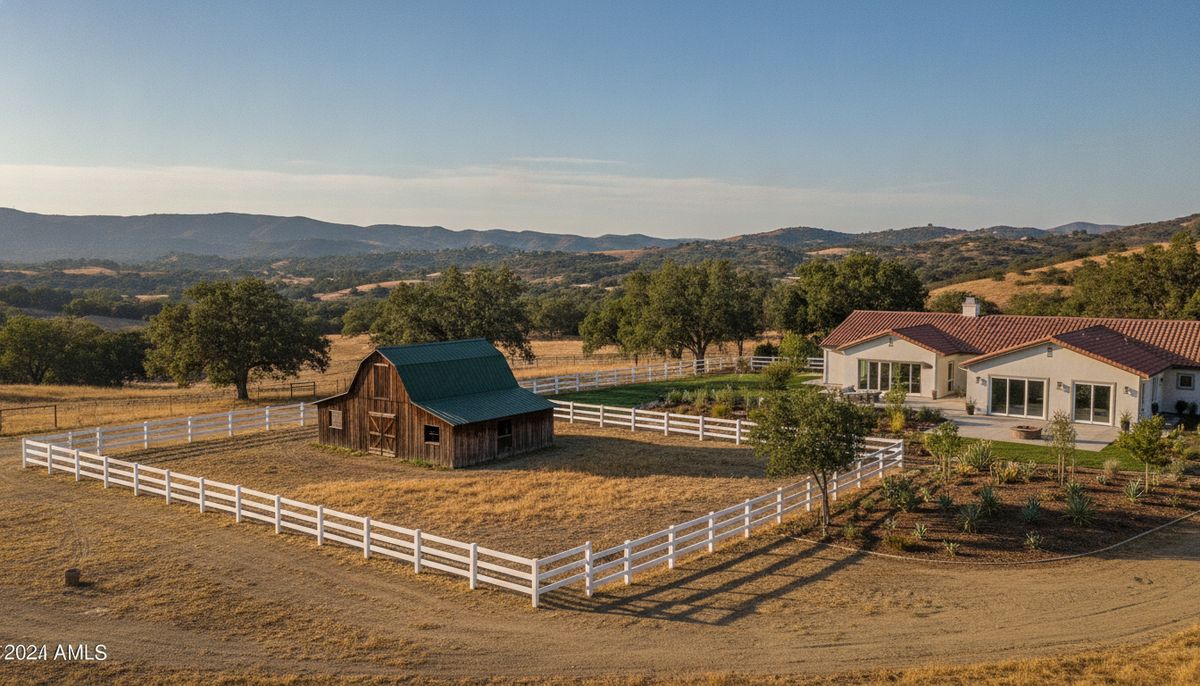
Usable pad, slope and the Poway code
Poway makes the excess-or-surplus question unusually concrete. Under the city zoning code, density in the RR-A, RR-B, RR-C and RS-1 zones depends on slope, measured by a registered civil engineer from a topographic map. In RR-A with City water, ground under 15 percent slope allows one parcel per four net acres, while steeper bands require eight or twenty, and slopes above 45 percent earn no credit at all. Land without City water service faces far larger minimums.
That means a seven-acre RR-A parcel with steep chaparral may hold no second building site, and the extra acres become surplus. The code also requires voter approval for changes that would raise density under these rules, so a hopeful rezoning is not something Brian credits without evidence. The RR-B2 designation in the High Valley area follows a different rule, allowing one parcel per two net acres without slope criteria and without requiring City water, provided smaller lots keep a contiguous building site of at least one acre.
Arenas, barns and corrals
Horse keeping is woven into the Poway landscape, especially toward the east side and Sycamore Canyon, where ranch parcels sit near the trail network. Improvements such as a lighted riding arena, a mare motel, a hay barn with tack room or pipe corrals are listed separately and rated for condition and function. Their contribution is measured against what buyers actually paid, not against construction cost.
A well-drained arena with good footing on a level pad may add meaningful value for an equestrian buyer, while a sagging shed row on a slope may add little or even need removal. Permits matter too: the city counts large animals across contiguous parcels and requires use permits once totals reach certain thresholds. Brian asks owners for any permits or approvals tied to barns and covered stalls, since an unpermitted structure is reported as such.
Finding comparable acreage sales
True matches are thin. In a given year, only a handful of improved properties on several usable acres may close within Poway, so the search often widens in time and geography, toward Ramona, the unincorporated land around Highland Valley, or the Rancho Bernardo fringe where lots are large. Each step outward adds an adjustment to defend. Brian prefers comparables that share the same constraint, such as a similar pad size or similar water status, over ones that merely match recorded acreage, because a buyer pays for what the land allows.
Bracketing the answer
With imperfect comparables, bracketing becomes the main safeguard. The appraiser looks for at least one sale with more usable land and one with less, one with better horse facilities and one with fewer, so the subject falls between them on each major feature. If every comparable must be adjusted upward for the same item, the conclusion rests on an unsupported number. Land sales, paired comparisons and listings that failed to sell all help confirm where the subject sits within that range.