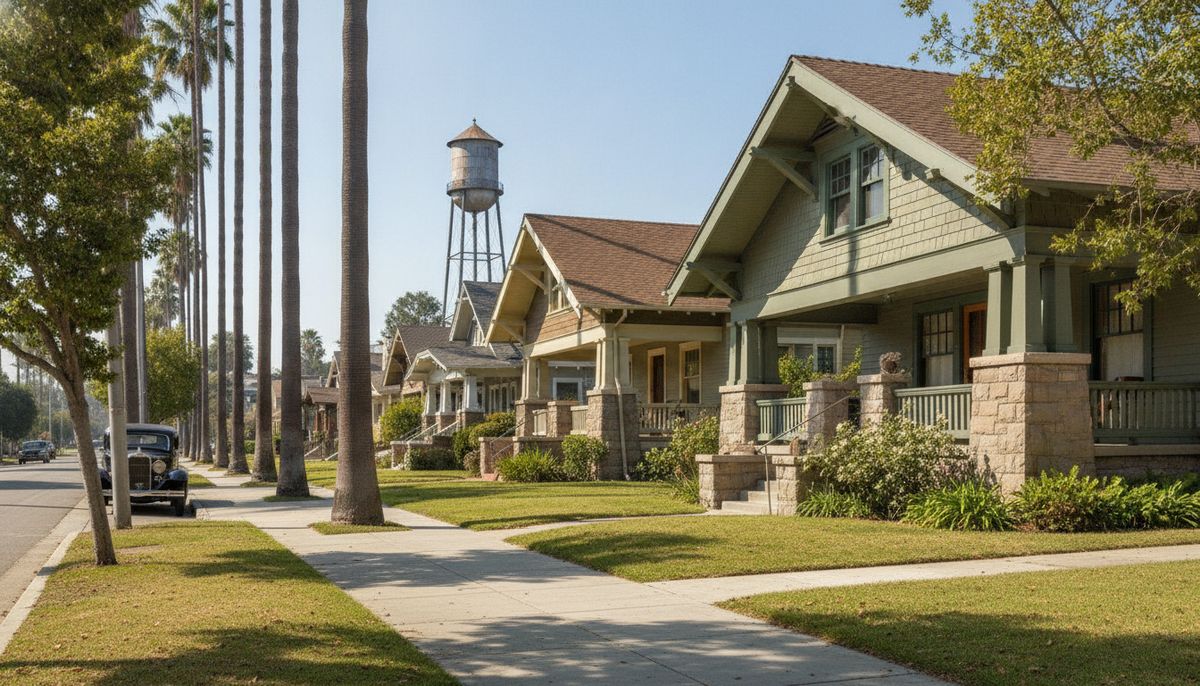
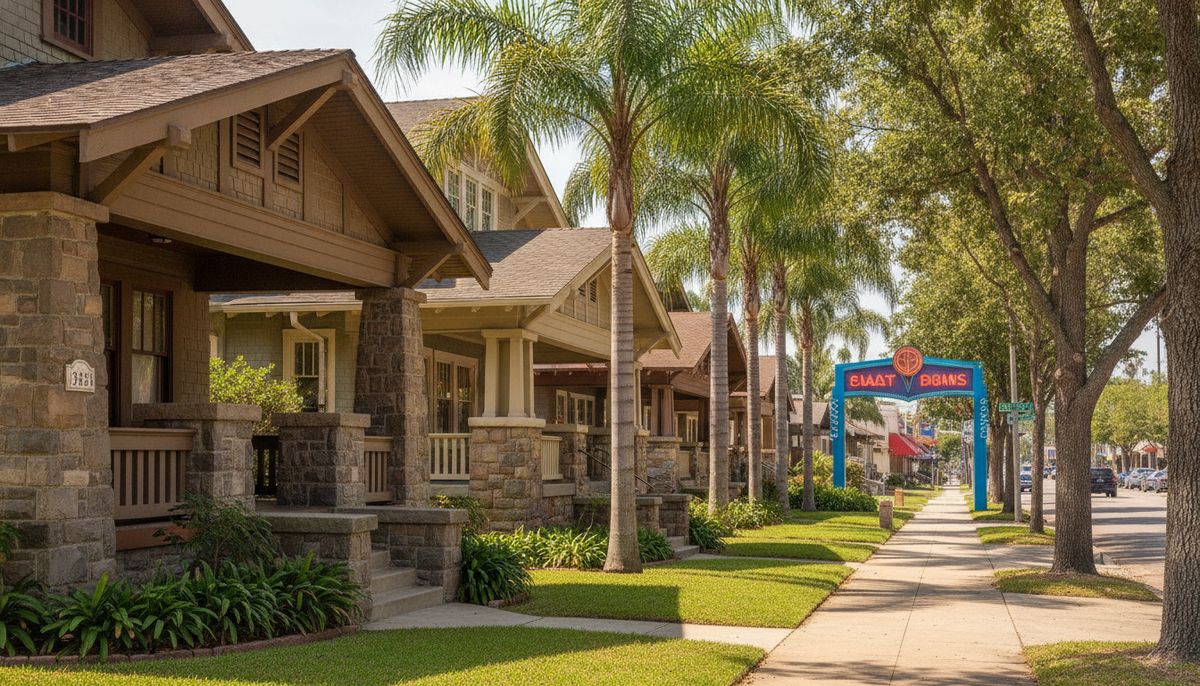
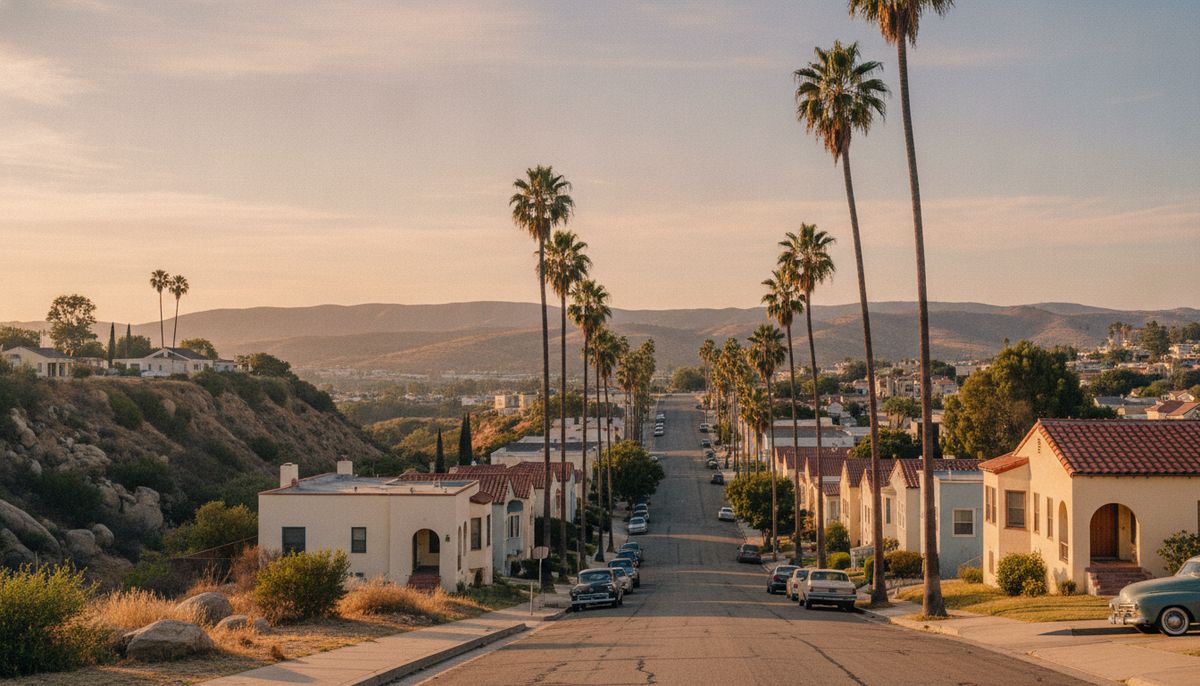
South Park sits on the mesa directly east of Balboa Park, running from the golf course edge at 28th Street over to Juniper Canyon and State Route 15, between Juniper Street and A Street. The original South Park Addition was mapped in 1870 but sat empty until E. Bartlett Webster bought the land in 1905 and the Bartlett Estate Company put in water, sewer, sidewalks and power. A year later the South Park and East Side Railway opened, making it the city's first streetcar suburb. The city designated the original addition as the South Park Historic District in 2017.
Homes and lots in South Park
Most houses went up between about 1905 and 1930, and the inventory still reads like a catalog of that era: Craftsman bungalows with deep porches, Spanish Colonial Revival stucco homes with tile roofs, and a scattering of work credited to Irving Gill, William Hebbard and Richard Requa. Bungalow courts and small two-story apartment buildings fill in along the busier streets. Lots are typically narrow, many around 50 by 125 feet or smaller, with alley access on some blocks and detached garages that have often become studios or granny flats. Along the canyon side, streets end at the rim of Juniper and Switzer canyons, where slope and brush shape what a parcel can hold.
How South Park sales behave
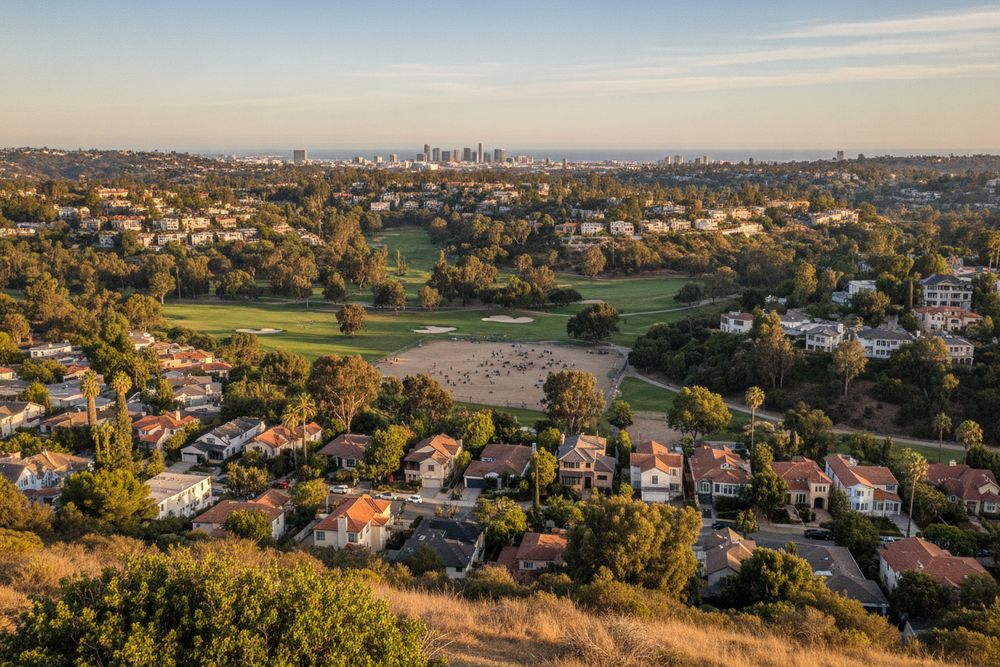
Buyers come for walkability to the 30th and Fern business district, the dog park on Grape Street and the short drive downtown. Restored originals with intact woodwork and windows tend to draw the strongest interest, while houses with heavy 1970s remodels or unpermitted additions sit longer and trade at a discount to the restored ones. Supply is thin because owners hold for decades, so a single sale can shift perception of a block. Small multi-unit properties and lots carrying a second dwelling attract investors, and condo conversions in the old apartment buildings give a lower entry point than detached houses.
Neighborhoods and subdivisions
30th and Fern business districtBrooklyn HeightsGrape Street blocksJuniper Canyon rimSouth Park Historic District
Landmarks
- Balboa Park Golf Course
- Grape Street Dog Park
- Juniper Canyon
- 30th Street
- Fern Street
Appraisal watch points in South Park
Historic district status matters here: the city reviews alterations to facades, and a handful of houses hold Mills Act agreements that trim the tax bill and pass along to each new owner, a point some purchasers care about. Brian checks whether a porch enclosure, second story or rear unit was permitted, because century-old houses often hide decades of informal work. Canyon-rim lots can carry a view premium and also a brush-management burden. Original single-pane windows, knob-and-tube wiring and raised foundations count against condition. South Park falls inside his in-person territory, so a client can order anything from a quick Basic Desktop to a fully inspected Standard report, Drive-By included.
Our late father's Craftsman in South Park has a converted garage in back. Will that change the appraised value for the estate?
It can, in either direction. Brian first checks city permit history for the conversion. A permitted accessory unit with its own kitchen and bath often adds real value on these narrow lots, since buyers here pay for rental income or space for family. An unpermitted conversion is usually treated as storage or flex space, with a lower contribution, and the report says so plainly. Photos of the interior and any paperwork the family can find help make that call.